


Custom Cap Sampling Checklist: How To Approve A Pre-Production Sample
Aug 25, 2026
Leave a message
A custom cap may look simple, but its final appearance depends on connected details: crown profile, panel symmetry, visor curve, closure, fabric, embroidery and packaging. Sample approval should therefore create a clear, measurable production reference rather than rely on a quick visual decision.
Understand What Each Sample Is Supposed to Prove
Not every sample answers the same question. Mixing sample stages can lead to premature approval.
Prototype or Development Sample
An early prototype tests the concept, including silhouette, panel count, visor shape, closure and approximate decoration. Because substitute materials may be used, it should not automatically become the bulk-production standard.
Pre-Production Sample
The pre-production sample should represent the agreed construction. Confirm the intended fabric, sweatband, closure, thread colors, labels, reinforcement and packaging. Record any approved substitute rather than accepting it through an informal message.
Top-of-Production and Shipment Inspection
A first unit from the production line can show whether bulk output repeats the approved specifications. ISO 2859-1:2026 describes acceptance sampling schemes indexed by an Acceptance Quality Limit for lot-by-lot inspection.
Buyers should agree on defect categories and acceptance criteria before production; one approved sample does not replace order inspection.
Build the Approval Standard Before the Sample Arrives
A controlled approval file should combine the technical specification and latest confirmed comments.
For a custom cap, useful fields include:
Cap style, panel construction and intended crown profile
Crown height, head opening, visor length and closure dimensions
Fabric composition or approved material reference
Color references for shell fabric, sewing thread and embroidery
Logo artwork, decoration method, dimensions and placement
Sweatband, interior taping, labels, closure and other trims
Packaging, assortment, carton markings and barcode requirements
Measurement tolerances and defect classifications
Revision number, sample date and approval status
QIMA groups garment inspection requirements around product specifications, packaging, labeling and on-site tests. Techpacker also emphasizes specifications, bills of materials, size information, color references, packaging files and written sample revisions. These principles translate well to headwear sourcing.
Inspect the Cap from Silhouette to Stitch
Begin with the overall appearance before moving to individual measurements. View the cap from the front, side, back and top. Compare the left and right sides, panel seams and eyelet positions.
Check whether the crown collapses, twists or leans when placed naturally. If the design requires a structured front, confirm that its support creates the intended profile without visible bubbling.
Measure from Repeatable Reference Points
Measurements should be taken the same way during every inspection.
For example, define whether crown height is measured along the front center seam, where visor length begins and how the head opening is positioned. Record the method in the specification instead of relying only on a number.
The visor deserves a separate check. Review its symmetry, stitch rows, edge shape and curve. Confirm that it is centered relative to the crown and that the joining seam is even.
Examine Embroidery and Other Decoration Closely
For embroidery, check the design size and its position from fixed construction points such as the front center seam or visor edge.
Inspect both the face and reverse side. Look for:
Loose or untrimmed threads
Missing stitches or visible gaps
Exposed or poorly trimmed backing
Uneven stitch density
Distorted design outlines
Color misalignment
Puckering around the embroidered area
For patches, heat transfers or prints, confirm alignment, edge finish, adhesion and surface cleanliness. The approved sample should record the decoration method because an artwork mockup alone does not define how the logo will be produced.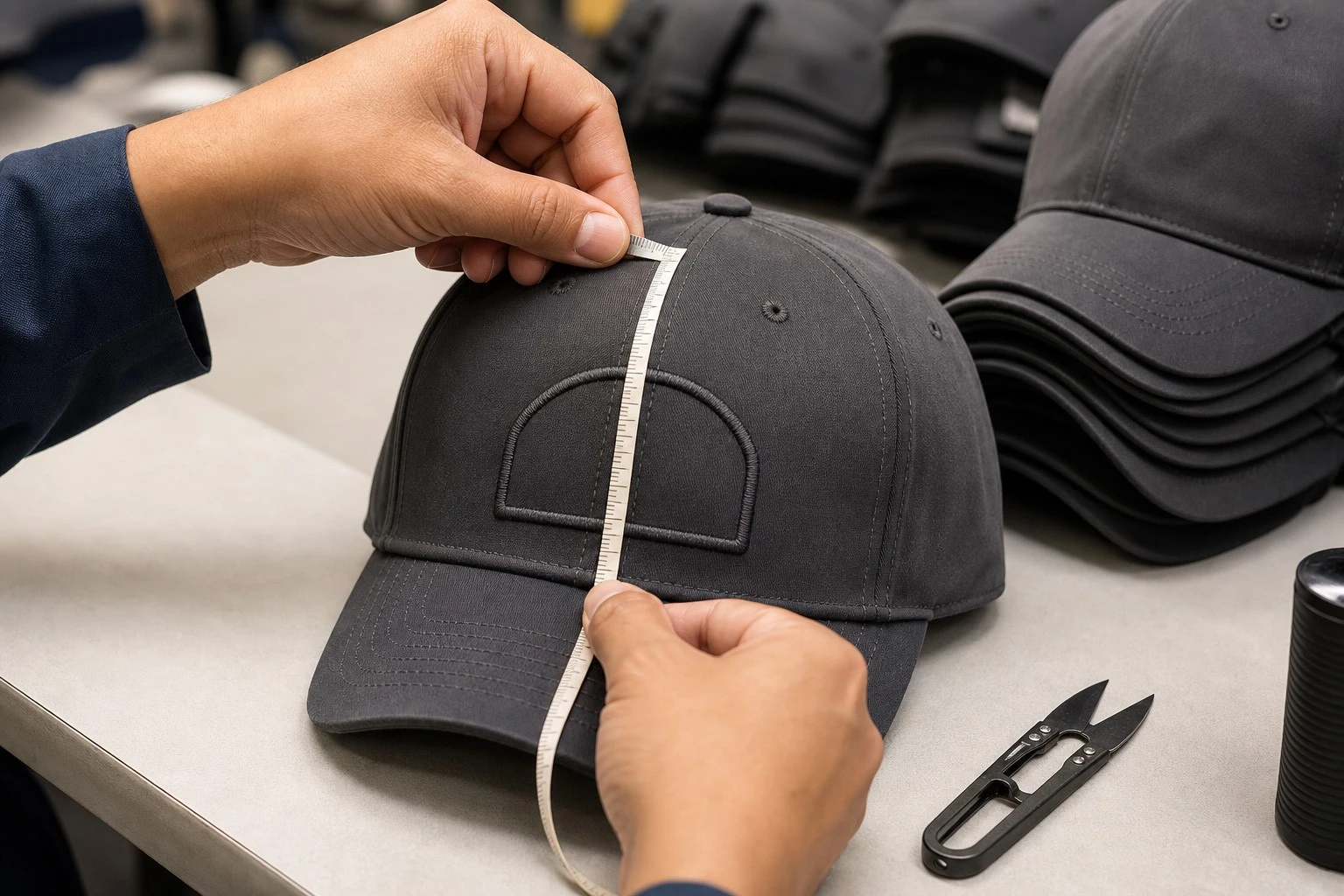
Confirm Materials, Color and Wear-Relevant Details
Compare fabric color with an approved physical or standardized color reference under consistent lighting. Screens are useful for communication, but they should not be the only final color reference.
Check the fabric hand feel, visible weave, coating or wash effect. Panels from different parts of the cap should not show unintended shade variation.
Operate the closure several times and inspect how it is attached. Review the sweatband for even stitching, comfort and cleanliness. Check interior taping, labels and seam ends.
If the product includes a performance or compliance claim, the testing requirements should be agreed separately and supported by appropriate evidence. The appearance of a sample alone cannot verify waterproofing, UV protection, recycled content or regulatory compliance.
Turn the Approved Sample into a Controlled Production Reference
Sample approval should end with a clear decision:
Approved
Rejected and requiring another sample
Approved subject to specifically documented corrections
Avoid vague comments such as "make it better" or "the logo looks slightly wrong." A useful comment identifies the issue, exact location, required change and supporting measurement or photograph.
Maintain one revision log. Each change should show the previous requirement, new requirement, date and approver.
Update the technical file after approval so production teams are not working from an earlier attachment. Keep one physical approved sample with the manufacturer and, where practical, another with the buyer or inspection team.
Photograph the final sample from multiple angles and identify it using a controlled sample code.
Extend the Standard to Packaging and Bulk Inspection
Packaging affects how caps arrive at the buyer's warehouse. Confirm how the crown and visor will be supported, how caps will be nested and whether tissue paper or inserts are required.
The packaging reference can also cover:
Hangtag and label position
Unit assortment
Polybag or alternative packing format
Carton dimensions and weight limits
Shipping marks and barcode placement
Protection against pressure or crown deformation
Before shipment, the inspection plan should compare production units with the approved specification and reference sample.
AQL-based sampling can support a lot-acceptance decision, but the buyer still needs product-specific defect definitions. A wrong logo, broken closure or severe crown distortion may require different treatment from a removable thread end.
These standards should be agreed in writing before production rather than decided after defects appear.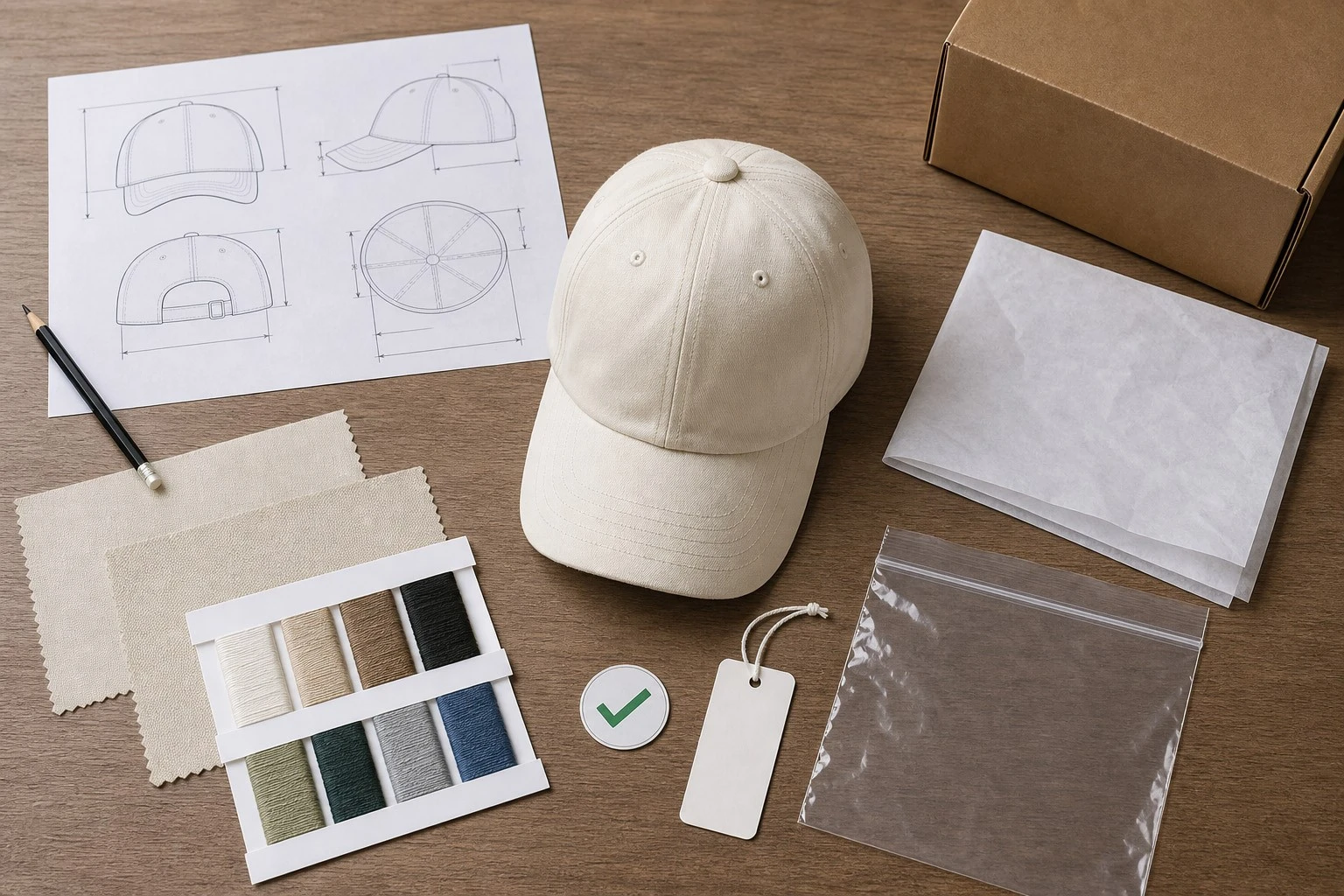
A Better Sample Approval Creates a Better Sourcing Conversation
Effective custom cap sampling is a shared communication system.
Buyers provide complete and stable requirements. Manufacturers identify technical risks and document deviations. Inspectors compare bulk production against the same approved standard.
If you are planning a custom headwear project, send your cap style, artwork, target materials, quantity range, destination market and required delivery window for a feasibility review.
A responsible factory response should clarify the information still needed before discussing sampling and production-without promising specifications that have not yet been confirmed.