


How To Choose The Best Fabric For Custom Caps: A Buyer’s Guide
Aug 24, 2026
Leave a message
Choosing fabric for a custom cap is not simply a choice between cotton and polyester. Fabric affects the cap's hand feel, shape, decoration quality, care requirements, weather performance, and sourcing documentation.
A material that works for a casual retail dad hat may be unsuitable for a running cap or a structured corporate program.
For buyers, the most useful approach is to begin with the wearing scenario and required product performance, then specify the material precisely enough for factories to quote and sample on the same basis.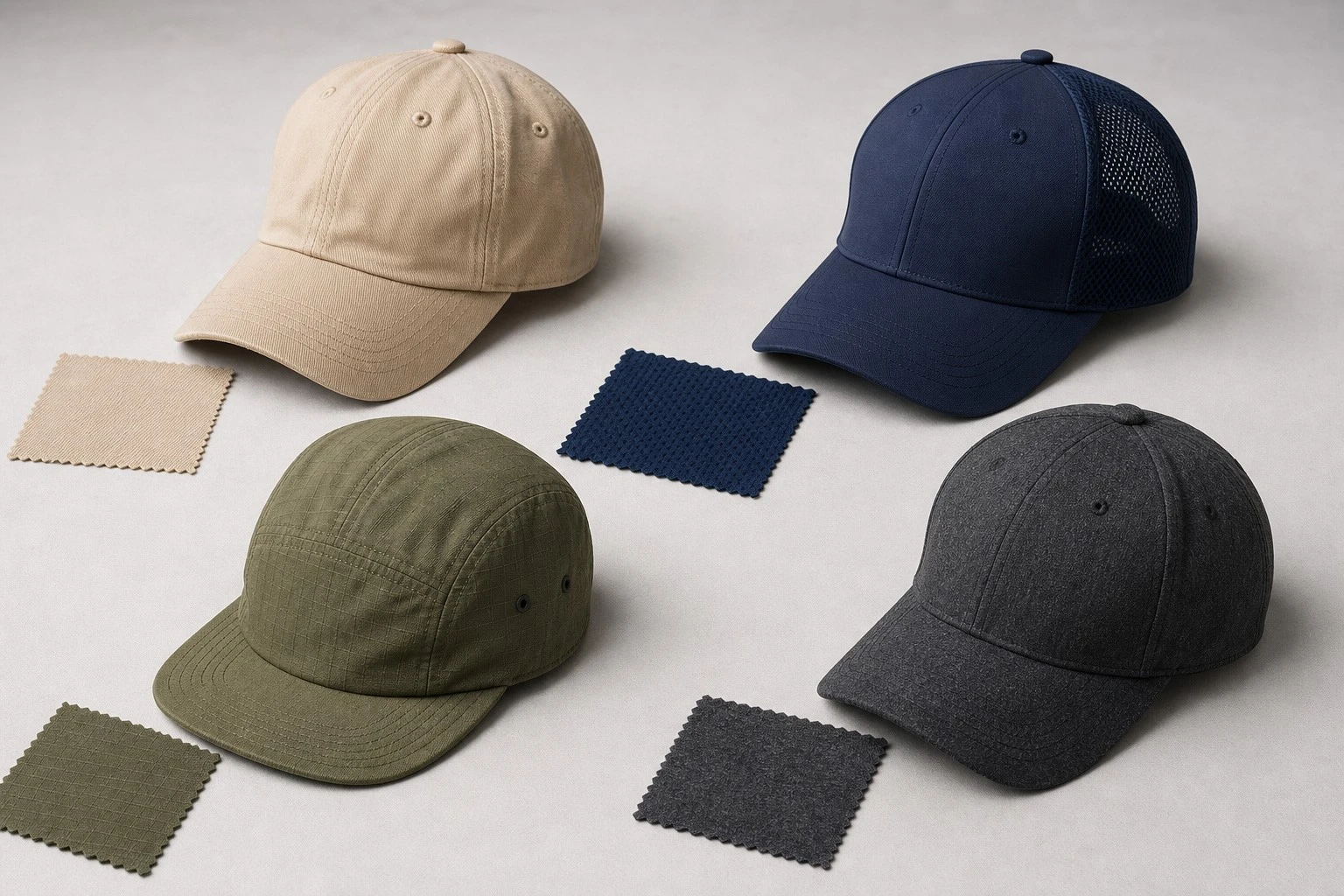
Start With the End Use
Before discussing fiber names, define how the cap will be worn. Consider climate, expected wear time, activity level, retail positioning, washing expectations, and whether the cap needs a soft or structured appearance.
A lifestyle collection may prioritize natural texture and comfort. An event giveaway may need color consistency and straightforward care. An outdoor program may require a lightweight fabric, faster drying, abrasion resistance, ventilation, or a tested protective finish.
"Best material" therefore has no universal answer. The right fabric is the one that supports the product brief without introducing unnecessary cost, care problems, or claims that cannot be documented.
Cotton Twill: Familiar, Comfortable, and Versatile
Cotton twill remains a practical option for baseball caps, dad hats, promotional caps, and casual branded merchandise. Its diagonal weave can provide a recognizable workwear or sportswear appearance, while washed versions create a softer and more relaxed character.
Cotton generally absorbs moisture and can feel comfortable against the skin. However, absorption is not the same as fast drying. For high-intensity sport or very humid conditions, a cotton cap may stay damp longer than a suitable synthetic performance fabric.
Buyers should specify more than "100% cotton." The quotation request should identify:
Fabric weight or approved physical reference
Weave and surface texture
Color standard
Wash treatment
Shrinkage expectations
Required colorfastness
Applicable care instructions
Garment washing, enzyme washing, pigment dyeing, and other finishes can change shade, surface character, measurements, and decoration results.
For embroidered products, approve the logo on the finished fabric treatment. A design embroidered before washing may not look identical to one embroidered after the cap has been washed or distressed.
Polyester: Durability and Performance Options
Polyester is often selected when buyers need shape retention, wrinkle resistance, strong color performance, faster drying, or technical constructions. It appears in structured caps, performance caps, mesh backs, uniforms, and outdoor promotional products.
The term "polyester" covers a wide range of fabrics. A basic woven polyester, moisture-management fabric, textured performance fabric, and recycled-polyester fabric are not interchangeable.
Their weight, stretch, surface, ventilation, coating, and decoration behavior can differ substantially.
If performance is important, describe the required result rather than relying on a marketing name. Ask:
Has moisture management been tested?
Has water repellency been tested?
Is ultraviolet protection required?
Which test method was used?
Does the result apply to the fabric or complete finished cap?
How many washing cycles does the performance need to withstand?
Heat-transfer decoration also requires sampling because temperature and pressure can affect synthetic surfaces, coatings, color migration, or fabric shine.
Nylon: Lightweight Options for Outdoor Programs
Nylon is commonly considered for packable caps, five-panel styles, running caps, bucket hats, and outdoor headwear. Suitable constructions can be lightweight, abrasion resistant, and quick drying.
As with polyester, buyers should not assume that the fiber name guarantees waterproofing, wind resistance, or sun protection. Those properties depend on fabric construction, density, coating, finish, product design, and testing.
For a packable cap, evaluate recovery after folding. For an outdoor cap, inspect:
Seam construction
Ventilation
Sweatband performance
Visor material
Fabric behavior when wet
Surface abrasion
Color performance under sunlight
A very lightweight material may require reinforcement or careful embroidery planning to prevent puckering.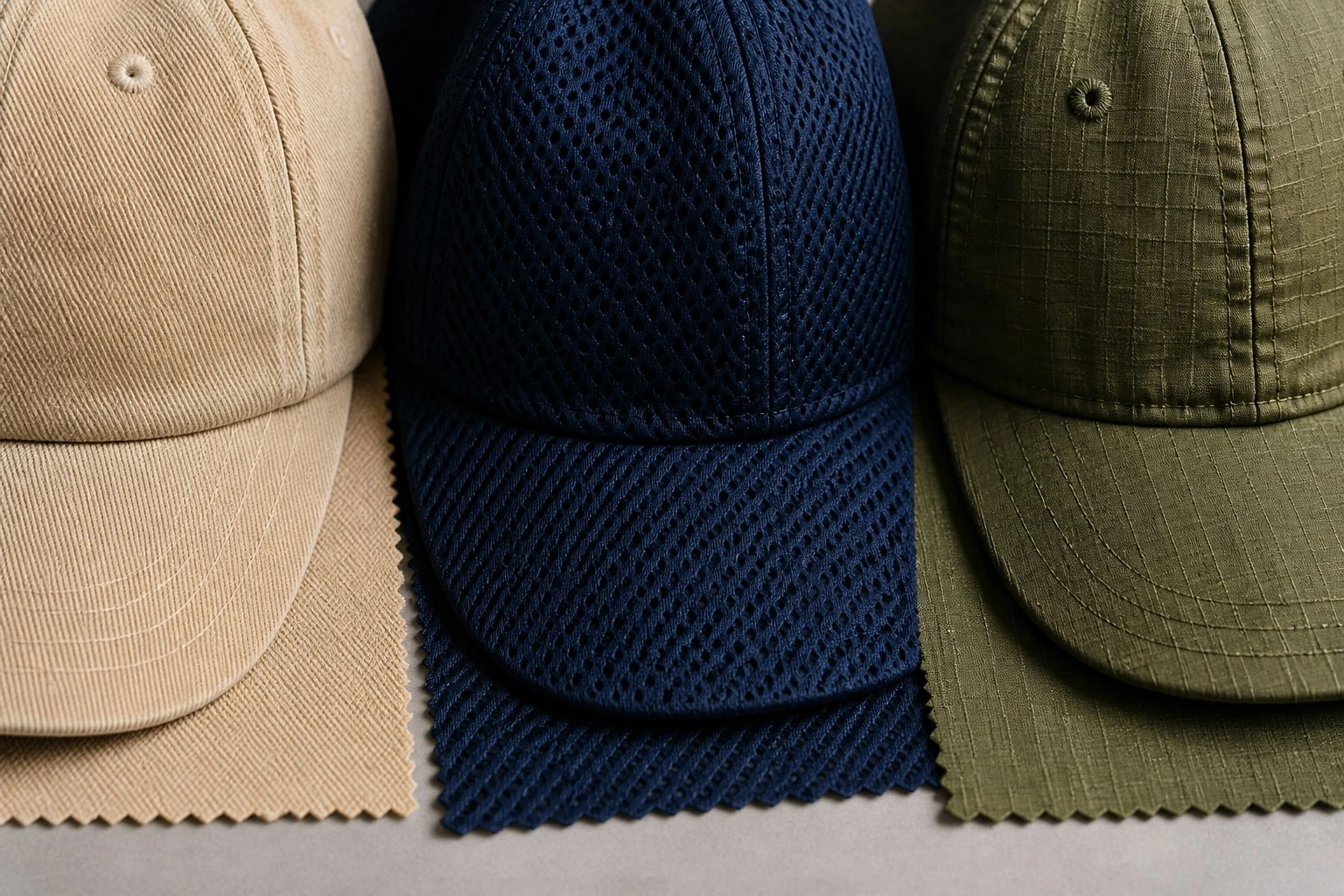
Blends: Balancing Feel and Performance
Cotton-polyester blends can combine a more natural hand feel with improved shape stability, drying behavior, or durability.
Blends are useful when neither a fully natural nor fully synthetic fabric meets the entire brief. However, blended composition can complicate recycling and sustainability communication. It may also change dyeing, washing, shrinkage, and heat-transfer behavior.
Buyers should record the exact fiber percentages and ensure that the approved sample, quotation, labeling, and production specification all use the same composition.
A blend should solve a defined product problem. It should not be selected merely because it is described as "premium" or "performance."
Recycled and Certified Materials: Verify the Evidence
A 2026 sustainable-fabrics guide updated in July highlights organic cotton, recycled cotton, and recycled polyester among the materials brands are evaluating.
For headwear buyers, the important issue is not simply whether a supplier uses the word "recycled" or "organic," but whether the claimed content and chain of custody can be supported.
Request the following information:
Exact fiber composition
Claimed recycled or organic percentage
Certification name
Certificate number
Certified company name
Certificate validity period
Certified product scope
Transaction documentation required for the order
Confirm whether the certification covers the finished cap, the fabric, the yarn, or only an upstream supplier.
This matters for external marketing. The European Commission's Green Claims page states that environmental claims should be reliable, comparable, and verifiable. Its proposed rules include criteria for substantiating claims and independent verification.
Buyers selling into Europe should have qualified compliance advisers review the environmental claims they intend to publish.
Avoid broad statements such as:
"100% sustainable"
"Zero environmental impact"
"Completely eco-friendly"
"Carbon neutral"
"Made entirely from ocean plastic"
These statements should not be used unless the company has specific supporting evidence and the wording is legally appropriate for the target market.
What to Put in a Cap Fabric Specification
A useful request for quotation should include:
Fiber composition and permitted tolerance
Fabric construction, such as twill, canvas, ripstop, mesh, or knit
Target weight or approved physical reference
Color standard and acceptable shade tolerance
Wash, coating, brushing, or water-repellent finish
Required performance tests and methods
Shrinkage and colorfastness requirements
Decoration method and artwork location
Certification and traceability documents
Target market
Care-label and fiber-label requirements
Sample quantity
Estimated production quantity
Delivery destination
Ask for fabric swatches before committing to a cap sample when several materials are under consideration.
Review the swatches under consistent lighting and compare:
Touch and softness
Thickness
Stretch
Shape recovery
Surface texture
Color
Transparency
Wrinkling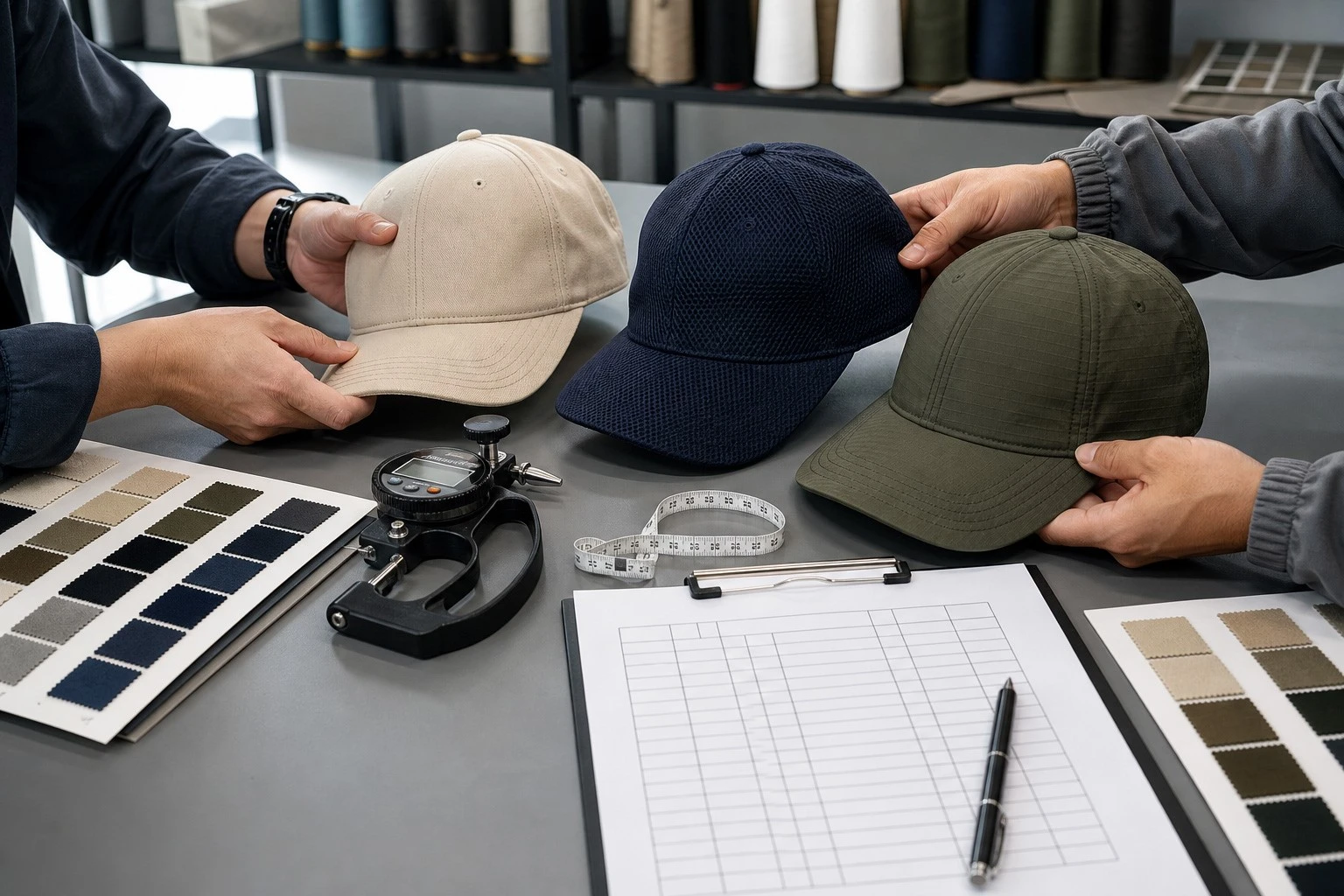
Test the Finished Cap, Not Only the Fabric
Fabric data is valuable, but the finished product combines crown construction, seams, thread, sweatband, visor, closure, decoration, and finishes. These components interact.
A pre-production sample should be checked for:
Fit and crown shape
Fabric shade
Logo appearance
Seam puckering
Closure function
Care behavior
Promised performance features
Label information
Packaging presentation
Consistency with the approved specification
If a finish or recycled-content claim is commercially important, preserve the supporting records with the approved product specification.
Choosing cap fabric becomes easier when buyers replace broad material names with measurable requirements. Start with the wearer, define the required performance, compare actual swatches, verify claims, and approve the complete cap before production.
Planning a custom headwear program? Share your intended use, target market, artwork, quantity, material preferences, and testing needs with your manufacturing partner. A detailed brief allows the product team to recommend suitable sampling options without making assumptions about your brand or compliance requirements.
Compatibility with embroidery or printing